


Hexane
Hexane is a hydrocarbon with the chemical formula C₆H₁₄. It is:
A colorless, highly flammable liquid
Part of the alkane family (straight-chain and branched isomers)
Commonly used as an industrial solvent, in extraction processes (such as vegetable oil extraction), and in laboratories
Found in gasoline mixtures
Physical properties (typical for n-hexane):
Boiling point: ~69 °C
Density: ~0.66 g/mL
Non-polar and immiscible with water
⚠️ Hazards
Highly flammable liquid and vapor — ignites easily.
Central nervous system (CNS) toxin — can cause dizziness, headache, drowsiness, confusion.
Chronic exposure risk: peripheral neuropathy (numbness, tingling, muscle weakness).
Skin defatting/irritation — prolonged contact causes dryness or cracking.
Aspiration hazard — dangerous if swallowed and enters the respiratory tract.
Vapor inhalation — may cause respiratory irritation and nausea.
🧤 Safe Handling
Work in a fume hood or well-ventilated area — vapors are heavier than air and can accumulate.
Keep away from sparks, flames, heat, and static discharge.
Avoid breathing vapors; minimize open handling.
Don’t use near oxidizers.
Personal Protective Equipment (PPE)
Gloves: nitrile is typically recommended; avoid latex (poor resistance).
Eye protection: safety goggles.
Clothing: lab coat; avoid open-toed shoes.
Respiratory protection: if ventilation is poor, use appropriate organic-vapor cartridges (per institutional safety rules).
🔥 Storage
Store in tightly closed containers.
Keep in a flammable liquids cabinet.
Ground and bond containers during transfer.
Keep away from acids, oxidizers, and ignition sources.
⚡ Spill Response
Eliminate all ignition sources immediately.
Absorb small spills with inert materials (vermiculite, sand, spill pads).
Use PPE; avoid breathing vapors.
Place waste in sealed, labeled flammables containers.
🚑 First Aid
Inhalation: move to fresh air; seek medical attention if symptoms persist.
Skin contact: wash with soap and water; remove contaminated clothing.
Eye contact: rinse with water for ≥15 minutes; seek medical attention.
Ingestion: Do NOT induce vomiting; get medical help immediately.
₦580,000.00
Description
Hexane is a hydrocarbon with the chemical formula C₆H₁₄. It is:
A colorless, highly flammable liquid
Part of the alkane family (straight-chain and branched isomers)
Commonly used as an industrial solvent, in extraction processes (such as vegetable oil extraction), and in laboratories
Found in gasoline mixtures
Physical properties (typical for n-hexane):
Boiling point: ~69 °C
Density: ~0.66 g/mL
Non-polar and immiscible with water
⚠️ Hazards
Highly flammable liquid and vapor — ignites easily.
Central nervous system (CNS) toxin — can cause dizziness, headache, drowsiness, confusion.
Chronic exposure risk: peripheral neuropathy (numbness, tingling, muscle weakness).
Skin defatting/irritation — prolonged contact causes dryness or cracking.
Aspiration hazard — dangerous if swallowed and enters the respiratory tract.
Vapor inhalation — may cause respiratory irritation and nausea.
🧤 Safe Handling
Work in a fume hood or well-ventilated area — vapors are heavier than air and can accumulate.
Keep away from sparks, flames, heat, and static discharge.
Avoid breathing vapors; minimize open handling.
Don’t use near oxidizers.
Personal Protective Equipment (PPE)
Gloves: nitrile is typically recommended; avoid latex (poor resistance).
Eye protection: safety goggles.
Clothing: lab coat; avoid open-toed shoes.
Respiratory protection: if ventilation is poor, use appropriate organic-vapor cartridges (per institutional safety rules).
🔥 Storage
Store in tightly closed containers.
Keep in a flammable liquids cabinet.
Ground and bond containers during transfer.
Keep away from acids, oxidizers, and ignition sources.
⚡ Spill Response
Eliminate all ignition sources immediately.
Absorb small spills with inert materials (vermiculite, sand, spill pads).
Use PPE; avoid breathing vapors.
Place waste in sealed, labeled flammables containers.
🚑 First Aid
Inhalation: move to fresh air; seek medical attention if symptoms persist.
Skin contact: wash with soap and water; remove contaminated clothing.
Eye contact: rinse with water for ≥15 minutes; seek medical attention.
Ingestion: Do NOT induce vomiting; get medical help immediately.
🗑️ Hexane Waste Disposal Guidelines
1. Treat all hexane waste as hazardous waste
Hexane is:
A flammable liquid
A toxic solvent
Because of this, it must never be poured down the drain or evaporated in the open.
2. Use an approved, labeled waste container
Use a flammable-compatible container (metal or HDPE).
Must have a tight-fitting cap (hexane evaporates rapidly).
Label clearly: “Hexane Waste” or “Non-halogenated Solvent Waste.”
Include approximate contents if it’s a mixed solvent waste.
3. Store waste properly
Keep containers in a flammable cabinet.
Do not overfill; leave 10–20% headspace.
Keep away from oxidizers, acids, and ignition sources.
Ensure the container is grounded if transferring large volumes.
4. Segregate from incompatible waste streams
Do not mix hexane waste with:
Halogenated solvents (chloroform, dichloromethane)
Strong oxidizers
Reactive metals
Aqueous waste streams
Common acceptable grouping:
👉 “Non-halogenated organic solvent waste.”
5. Cleanup materials must also go into hazardous waste
Any materials contaminated with hexane—such as:
Wipes
Absorbent spill pads
Gloves
—should be placed in a sealed, labeled hazardous-waste bag or container, not regular trash.
6. Arrange pickup through your environmental health & safety (EHS) office
Typical process:
Submit container information to EHS.
Use the institution’s hazardous waste tag or online system.
EHS transports waste to a licensed disposal facility for recycling or incineration.
7. For small spills
Use inert absorbents (vermiculite, spill pads).
Dispose of absorbents as hazardous waste, NOT in general trash.
8. Never evaporate hexane as a disposal method
Intentional evaporation is usually prohibited due to:
Air quality regulations
Fire risk
Worker exposure
Related products
- Sale!
- Solvents
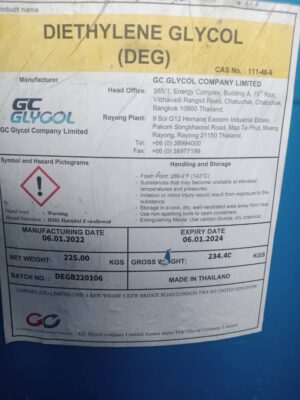
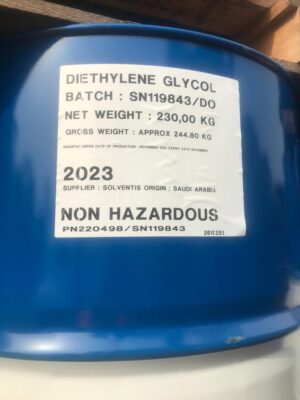
Diethylene glycol (DEG)
- Original price was: ₦340,000.00.₦335,000.00Current price is: ₦335,000.00.
- Add to cart

- Pharmaceutical Chemicals, Solvents
Emywax
- ₦148,750.00
- Add to cart
Reviews
There are no reviews yet.