- Food Chemicals Products, Pharmaceutical Chemicals, Solvents, Technical Chemical Raw Materials
Betleen Wax
- ₦157,500.00
- Beeswax is used as a raw material to make candles, cosmetics, polishes, pharmaceuticals, and protective coatings.
- Add to cart
- Food Chemicals Products, Pharmaceutical Chemicals, Solvents, Technical Chemical Raw Materials
Betleen Wax (Copy)
- ₦157,500.00
- Beeswax is used as a raw material to make candles, cosmetics, polishes, pharmaceuticals, and protective coatings.
- Add to cart
- Technical Chemical Raw Materials, Technical Chemical Raw Materials
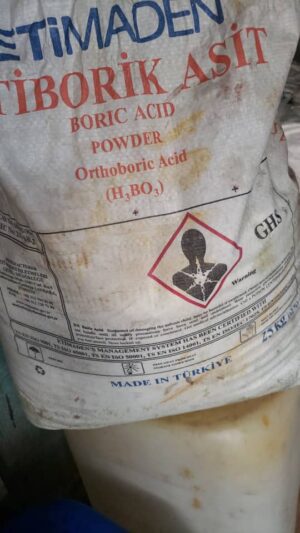
boric acid
- ₦70,000.00
- Boric acid — got it. That can mean a few very different things depending on what you’re looking for. Quick rundown first, then I’ll tailor it 👇 What it is: A mild acid (H₃BO₃), white powder/crystals, used in chemistry, medicine, and household stuff. Common uses: 🐜 Pest control: Ants, roaches (works slowly by disrupting their digestion) 🧪 Chemistry & labs:…
- Add to cart
- Technical Chemical Raw Materials, Thickners
Cetosterearyl Alcohol
- ₦147,000.00
- Cetostearyl Alcohol is a waxy fatty alcohol used as a thickening, stabilizing, and emulsifying agent in creams, lotions, ointments, shampoos, and other personal care products. It helps improve texture, consistency, and skin feel.
- Add to cart
- Technical Chemical Raw Materials, Technical Chemical Raw Materials
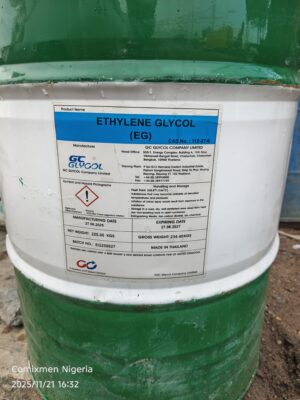
ethylene glycol
- ₦550,000.00
- Ethylene glycol is an organic compound with the formula C₂H₆O₂. It is a clear, colorless, syrupy liquid with a sweet taste — but highly toxic if ingested. Key facts Common uses Primary ingredient in antifreeze and engine coolants Used as a precursor in manufacturing polyester fibers and PET plastics Acts as a dehydrating agent in various industrial processes Physical properties…
- Add to cart
- Food Chemicals Products, Technical Chemical Raw Materials
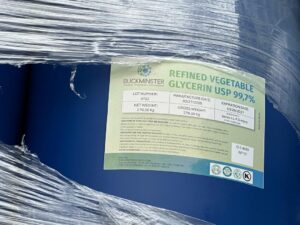
Glycerin
- ₦685,000.00
- Glycerin (or glycerol) is incredibly versatile, and its uses span pharmaceuticals, cosmetics, food, and industry. Here’s a structured breakdown: Chemical Identity IUPAC Name: Propane-1,2,3-triol Molecular Formula: C₃H₈O₃ Molar Mass: 92.09 g/mol Structure: Three carbon atoms, each bonded to a hydroxyl (-OH) group: HO-CH2-CH(OH)-CH2-OH Physical Properties Relevant to Chemistry Appearance: Colorless, odorless, viscous liquid Solubility: Highly soluble in water due to…
- Add to cart
- Construction Chemical Products, Technical Chemical Raw Materials, Water Treatment Chemicals
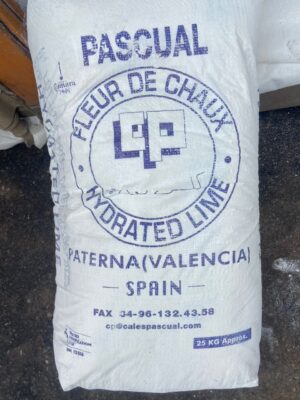
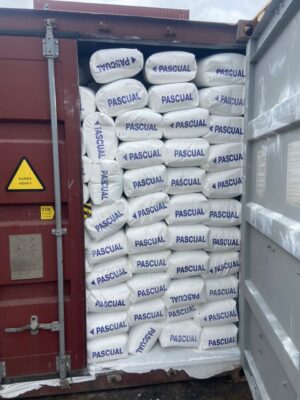
hydrated lime Pascual
- ₦22,000.00
- Hydrated lime is basically calcium hydroxide, with the chemical formula Ca(OH)₂. It’s also known as slaked lime. It’s produced by treating quicklime (CaO) with water — a process called “slaking.” Pascual is a brand (or maker) of hydrated lime. Their product is sold in various formats (e.g., paper bags, big sacks). Cales Pascual. They have a special version for water…
- Add to cart
- Technical Chemical Raw Materials, Technical Chemical Raw Materials
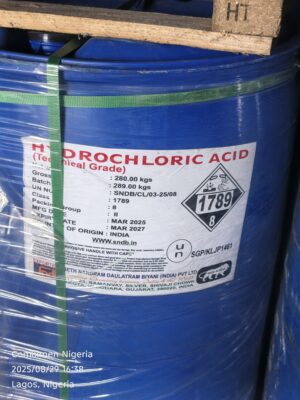
Hydrochloric acid (HCL) 280kg drum
- ₦170,000.00
- hydrochloric acid - HCL refers to hydrogen chloride, a colorless gas. When this gas is dissolved in water, it forms hydrochloric acid, a strong, corrosive mineral acid with a pungent odor. Hydrochloric acid is a strong, highly corrosive mineral acid made by dissolving hydrogen chloride gas in water. It is clear, colorless, and has a sharp, irritating smell.
- Add to cart
- Technical Chemical Raw Materials, Technical Chemical Raw Materials
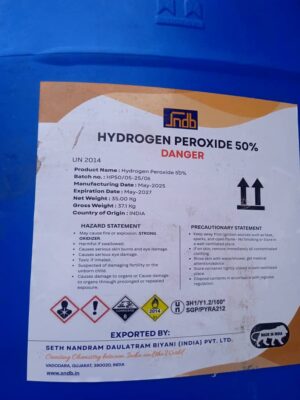
hydrogen peroxide 50 Percent
- ₦50,000.00
- Hydrogen peroxide (H₂O₂) at 50% It’s a very concentrated, industrial-grade oxidizer. Much stronger than common household peroxide (which is ~3%). Appearance: clear, colorless liquid, but chemically aggressive. Why it’s dangerous ⚠️ Severe burns to skin and eyes on contact ⚠️ Can ignite or violently react with organic materials, metals, or contaminants ⚠️ Decomposes into oxygen gas and heat → pressure/explosion…
- Add to cart
- Pharmaceutical Chemicals, Solvents, Technical Chemical Raw Materials
Isopropyl Mystrate [ IPM]
- ₦262,500.00
- Isopropyl Myristate (IPM) is a clear, lightweight ester used as an emollient, solvent, and penetration enhancer in cosmetic and pharmaceutical products. It provides a smooth, non-greasy feel, improves spreadability, and enhances the absorption of active ingredients into the skin.
- Add to cart
- Pharmaceutical Chemicals, Technical Chemical Raw Materials, Technical Chemical Raw Materials
Natural Graphite
- Natural graphite is widely used across industries because of its unique combination of properties—high electrical and thermal conductivity, chemical stability, lubricity, and resistance to high temperatures. Here are the main industrial applications.
- Read more
- Paint Chemicals, plastic chemicals, Technical Chemical Raw Materials
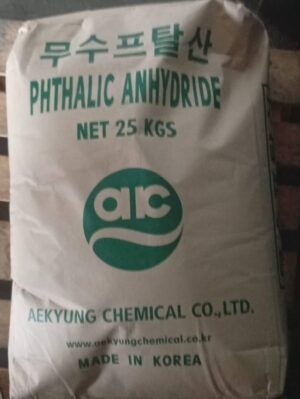
Phthalic Anhydride
- ₦70,000.00
- Phthalic anhydride is a white solid chemical used mainly to make plastics, paints, dyes, and resins. It is produced from petroleum-based materials and has the chemical formula C₈H₄O₃.Phthalic anhydride is a white solid chemical used mainly to make plastics, paints, dyes, and resins. It is produced from petroleum-based materials and has the chemical formula C₈H₄O₃.
- Add to cart
- Technical Chemical Raw Materials, Technical Chemical Raw Materials
Sodium sulphate Anhydrous
- ₦15,500.00
- Sodium Sulphate Anhydrous (Na₂SO₄) is an important industrial chemical with many applications: 1. Detergent Manufacturing 2. Glass Production 3. Textile Industry 4. Pulp and Paper Industry 5. Chemical Manufacturing 6. Animal Feed Additive 7. Pharmaceutical Applications
- Add to cart
- Technical Chemical Raw Materials
TALC [Magnesium silicate hydrated]
- ₦20,000.00
- Talc is a naturally occurring hydrated magnesium silicate mineral with the ideal chemical formula Mg₃Si₄O₁₀(OH)₂. It is the softest known mineral, ranking 1 on the Mohs scale, and is notable for its greasy or soapy feel. Talc’s chemical inertness, softness, and ability to absorb moisture make it valuable in a wide range of industrial and consumer applications.
- Add to cart
- Food Chemicals Products, Technical Chemical Raw Materials
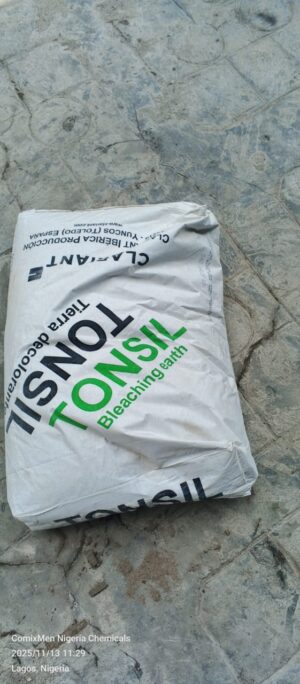
Tonsil bleaching earth
- ₦37,000.00
- What Bleaching Earth Is: Definition: Bleaching earth is a type of clay material used primarily in the refining of edible oils and other substances to remove color, impurities, and sometimes odor. Composition: It is mainly made of bentonite clay (montmorillonite) treated with acids (like sulfuric acid) to increase its adsorptive properties. Appearance: Usually light brown, yellow, or white powder. Uses:…
- Add to cart