

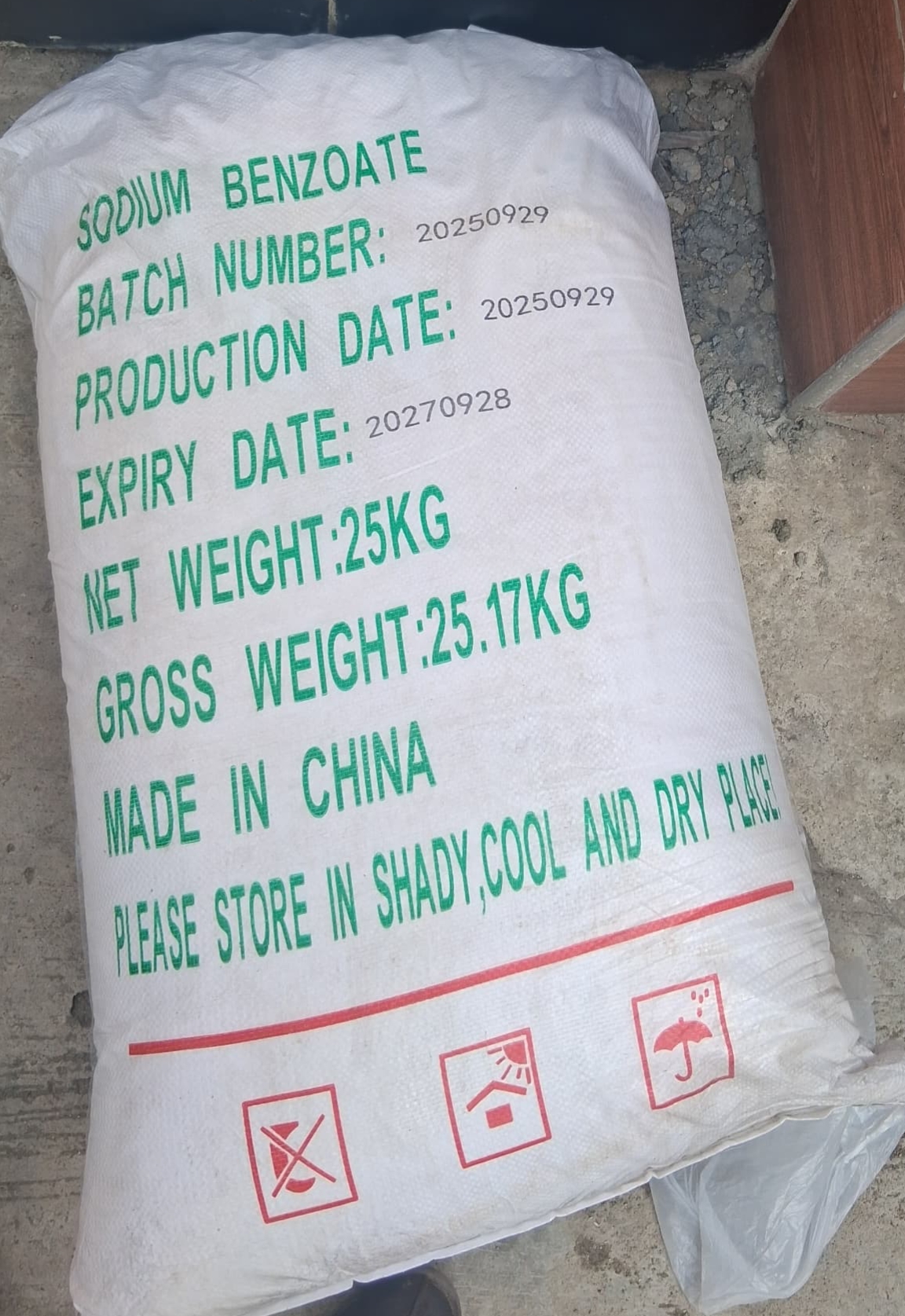
sodium benzoate
Sodium benzoate is a common food preservative 👀
Here’s the quick, useful breakdown:
What it is: The sodium salt of benzoic acid
What it does: Prevents growth of bacteria, yeast, and mold
Where you’ll find it:
Soft drinks and fruit juices
Pickles, sauces, salad dressings
Jams and condiments
Some cosmetics and medicines
Why it works best: In acidic foods (low pH)
Safety notes:
Generally recognized as safe in regulated amounts
In drinks with vitamin C (ascorbic acid), it can theoretically form tiny amounts of benzene if exposed to heat/light — this is why manufacturers carefully control formulations
Some people report sensitivity (like headaches or hyperactivity), but that’s not common
₦67,000.00
Description
Sodium benzoate is a common food preservative 👀
Here’s the quick, useful breakdown:
What it is: The sodium salt of benzoic acid
What it does: Prevents growth of bacteria, yeast, and mold
Where you’ll find it:
Soft drinks and fruit juices
Pickles, sauces, salad dressings
Jams and condiments
Some cosmetics and medicines
Why it works best: In acidic foods (low pH)
Safety notes:
Generally recognized as safe in regulated amounts
In drinks with vitamin C (ascorbic acid), it can theoretically form tiny amounts of benzene if exposed to heat/light — this is why manufacturers carefully control formulations
Some people report sensitivity (like headaches or hyperactivity), but that’s not common
Here’s a clear, side-by-side way to think about sodium benzoate vs other common preservatives, without the chemistry overload 🙂
Sodium Benzoate (E211)
Best for: Acidic foods
Common in: Soft drinks, juices, pickles, sauces
Pros
Very effective against bacteria + yeast
Cheap and stable
Works at low concentrations
Cons
Only works well in low-pH foods
Bad PR because of the vitamin C/benzene concern (even though regulated)
Some people prefer to avoid it
Potassium Sorbate (E202)
Best for: Acidic and slightly neutral foods
Common in: Cheese, yogurt, wine, baked goods
Pros
Gentler reputation than benzoate
Effective against mold and yeast
Doesn’t form benzene
Cons
Less effective against bacteria
Can affect taste at higher levels
👉 Often seen as the “cleaner label” alternative to sodium benzoate.
Calcium Propionate (E282)
Best for: Bread and baked goods
Common in: Packaged bread, tortillas
Pros
Excellent mold prevention
Works at neutral pH
Doesn’t affect yeast fermentation too much
Cons
Not good for acidic drinks
Some people report digestive discomfort
Sulfites (E220–E228)
Best for: Preventing oxidation + microbes
Common in: Wine, dried fruit, shrimp
Pros
Extremely effective
Also preserves color and flavor
Cons
Can trigger asthma or allergic reactions
Must be clearly labeled
Strong “chemical” reputation
Nitrates / Nitrites
Best for: Meat preservation
Common in: Bacon, sausages, deli meats
Pros
Prevents botulism (very important)
Maintains color and flavor
Cons
Health concerns at high intake
Not suitable for non-meat foods
Natural / “Clean-Label” Preservatives
Examples: vinegar, citric acid, rosemary extract, cultured dextrose
Pros
Consumer-friendly image
Familiar ingredients
Cons
Less potent
Shorter shelf life
More expensive
Quick Summary
Drinks & acidic foods: Sodium benzoate or potassium sorbate
Bread: Calcium propionate
Wine & dried fruit: Sulfites
Meat: Nitrites
“Natural” products: Vinegar, acids, plant extracts (but shorter shelf life)
21 reviews for sodium benzoate
Related products
-
- Sale!
- Food Chemicals Products
Monosodium Glutamate MSG
- Original price was: ₦50,000.00.₦45,000.00Current price is: ₦45,000.00.
- Add to cart



Jere –
you’re really a excellent webmaster. The website loading
velocity is incredible. It seems that you are doing any distinctive trick.
In addition, The contents are masterpiece. you have performed a great task on this matter!
Also visit my page: fintechbase
Stephaine –
Peculiar article, totally what I was looking for.
My site; http://www.emperorspalaceza.com
Yvette –
Woah! I’m really digging the template/theme of this website.
It’s simple, yet effective. A lot of times it’s very difficult to get that “perfect balance”
between user friendliness and visual appeal. I must say you have done a excellent job with this.
In addition, the blog loads extremely quick for me on Firefox.
Outstanding Blog!
Also visit my web-site: https://wildcoastsunza.com
Marco –
Magnificent beat ! I would like to apprentice
while you amend your web site, how could i subscribe for a blog site?
The account aided me a acceptable deal. I had been a little bit acquainted of this your broadcast offered bright clear concept
Here is my web site: https://riocasinoza.com
Ellie –
Usually I do not learn post on blogs, however I wish to say that this write-up very forced me to take a look at and do
so! Your writing style has been surprised me. Thanks, quite nice post.
My site: https://emnotwenicasinoza.com
Pearl –
Wow! In the end I got a web site from where I can truly take helpful data regarding my study and knowledge.
Also visit my blog … https://excapital-nigeria.com
Kerri –
Keep on writing, great job!
my blog best forex platforms Namibia Exness
Jacob –
What i do not realize is if truth be told how you are now not really much more smartly-preferred than you might be right now.
You’re so intelligent. You know therefore considerably in the case of
this topic, made me for my part believe it from a lot of varied angles.
Its like men and women aren’t interested unless it is one thing
to do with Lady gaga! Your personal stuffs nice. All the time maintain it up!
Look at my web page https://fxtrading-nigeria.com
Brianne –
I was wondering if you ever thought of changing the
layout of your website? Its very well written; I love what youve
got to say. But maybe you could a little more
in the way of content so people could connect with it better.
Youve got an awful lot of text for only having 1 or two pictures.
Maybe you could space it out better?
Have a look at my blog https://extrade-kenya.com
Mellisa –
Hello, always i used to check weblog posts here in the early hours in the morning, for
the reason that i love to find out more and more.
Feel free to visit my webpage; https://Prime-Trading.Co.Za/Spread/
Renato –
Awesome post.
My webpage https://extrading-nam.com
Jacques –
I absolutely love your website.. Excellent colors
& theme. Did you create this amazing site yourself? Please reply
back as I’m looking to create my very own blog and want to know where you got this from
or just what the theme is named. Thanks!
Feel free to surf to my webpage … https://fxtrade-nigeria.com
Margherita –
What i don’t realize is actually how you’re no
longer actually a lot more smartly-appreciated than you might be now.
You’re very intelligent. You know thus significantly when it
comes to this subject, made me personally consider it from numerous numerous angles.
Its like men and women are not involved unless it is one thing to accomplish with Lady gaga!
Your personal stuffs excellent. Always handle it up!
my website; https://fxtrading-za.com
Joanne –
This post will assist the internet visitors for setting
up new weblog or even a weblog from start to
end.
Visit my webpage :: cryptocurrency trading
Carol –
Appreciate the recommendation. Will try it out.
Here is my blog post … https://www.fx-capital-nigeria.com/
Rebekah –
You really make it seem so easy with your presentation but I find this
matter to be actually something that I think I would never
understand. It seems too complex and extremely broad for me.
I am looking forward for your next post, I will try to get the hang of
it!
Feel free to visit my homepage: InstaForex in Nigeria
Andra –
Awesome site you have here but I was curious about if you knew
of any community forums that cover the same topics talked about
here? I’d really like to be a part of group where I can get
responses from other experienced people that share the same interest.
If you have any suggestions, please let me know. Thanks a
lot!
Feel free to visit my page; FxPro Kenya
Cynthia –
We’re a group of volunteers and starting a brand new scheme in our community.
Your web site offered us with valuable info
to work on. You have performed a formidable activity and our whole community
will probably be thankful to you.
my web-site … Deriv Nigeria
Kristin –
Hello my family member! I wish to say that this article
is awesome, nice written and come with almost all important infos.
I would like to look extra posts like this .
Also visit my page: http://www.exbroker.co.za
Dannielle –
Touche. Outstanding arguments. Keep up the amazing work.
my site :: FxPro broker
Duane –
Nice blog here! Additionally your web site loads up very fast!
What host are you the use of? Can I am getting your associate link for your host?
I wish my web site loaded up as quickly as yours lol
Feel free to visit my blog post; https://fx-markets-south-africa.com/