
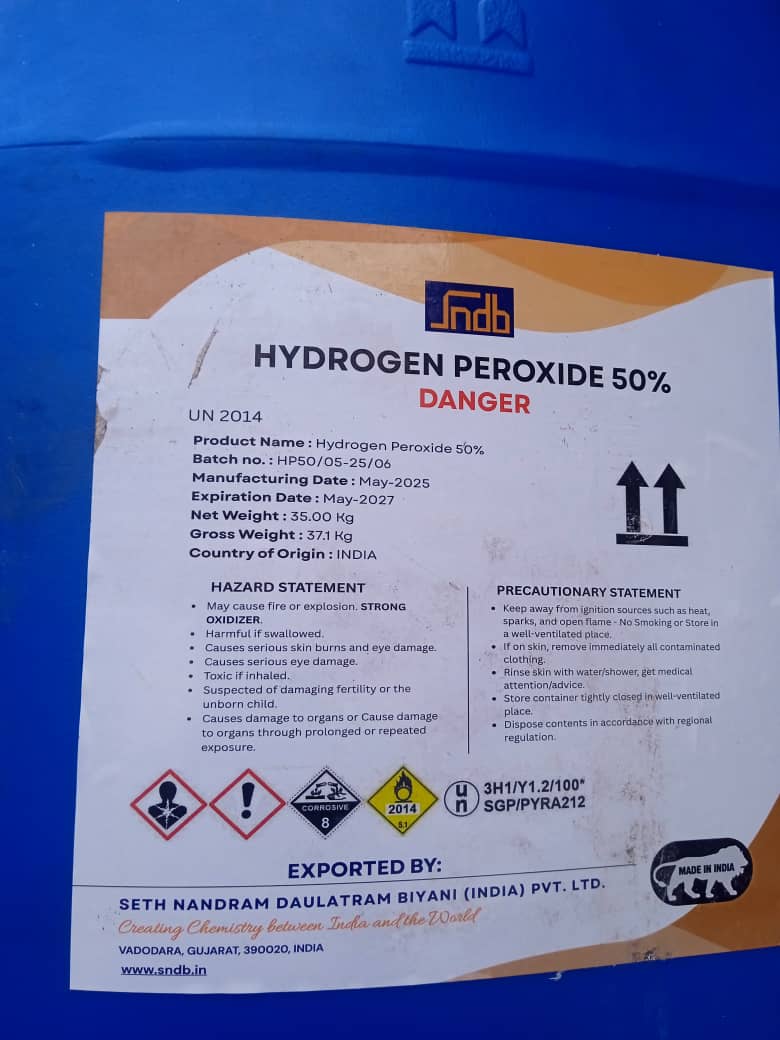
hydrogen peroxide 50%
Hydrogen peroxide (H₂O₂) at 50%
It’s a very concentrated, industrial-grade oxidizer.
Much stronger than common household peroxide (which is ~3%).
Appearance: clear, colorless liquid, but chemically aggressive.
Why it’s dangerous
⚠️ Severe burns to skin and eyes on contact
⚠️ Can ignite or violently react with organic materials, metals, or contaminants
⚠️ Decomposes into oxygen gas and heat → pressure/explosion risk if mishandled
⚠️ Vapors can irritate lungs
Typical (professional) uses
Chemical manufacturing
Propellants / rocket systems
Industrial bleaching and oxidation processes
Wastewater treatment (controlled environments only)
What it’s NOT for
❌ Never for medical, cosmetic, or household use
❌ Not safe to dilute or handle casually without proper training and equipment
Safety basics (non-negotiable)
Requires specialized containers, ventilation, PPE, and training
Storage and handling are usually regulated
₦50,000.00
Description
Hydrogen peroxide (H₂O₂) at 50%
It’s a very concentrated, industrial-grade oxidizer.
Much stronger than common household peroxide (which is ~3%).
Appearance: clear, colorless liquid, but chemically aggressive.
Why it’s dangerous
⚠️ Severe burns to skin and eyes on contact
⚠️ Can ignite or violently react with organic materials, metals, or contaminants
⚠️ Decomposes into oxygen gas and heat → pressure/explosion risk if mishandled
⚠️ Vapors can irritate lungs
Typical (professional) uses
Chemical manufacturing
Propellants / rocket systems
Industrial bleaching and oxidation processes
Wastewater treatment (controlled environments only)
What it’s NOT for
❌ Never for medical, cosmetic, or household use
❌ Not safe to dilute or handle casually without proper training and equipment
Safety basics (non-negotiable)
Requires specialized containers, ventilation, PPE, and training
Storage and handling are usually regulated
🚨 1. Classification & Hazard Regulation
Hazard Classification
Under the Globally Harmonized System (GHS) (used in most countries), hydrogen peroxide above ~5% is classified as a dangerous oxidizer and corrosive substance requiring:
GHS hazard pictograms
Signal word “Danger”
Specific hazard and precautionary statements on labels and safety data sheets (SDS) .
At 50% concentration, it falls into corrosive and severe hazard categories due to its ability to cause severe burns and intense oxidation .
Chemical Safety Reporting
In regions like the EU under REACH, producers/importers of hazardous chemicals (including concentrated H₂O₂) must submit detailed safety and exposure reports if volumes exceed regulatory thresholds annually .
🚚 2. Transport Regulations (International & National)
Hydrogen peroxide is classified under the UN Model Regulations on the Transport of Dangerous Goods, which many countries incorporate into their laws. For 50%:
Shipping Classification
UN Number: UN 2014
Class: Class 5.1 (oxidizing substance) with a subsidiary hazard Class 8 (corrosive)
Packing Group: II (medium danger) .
Transport Rules by Mode
Road/Rail/Sea (ADR, IMDG): Permitted with special marking, packaging, and safety requirements.
Air (IATA/ICAO): Hydrogen peroxide over ~40% is generally prohibited on aircraft due to pressure and decomposition risks .
Key obligations for transport:
Proper UN hazard labels, placards, and documentation
Vented containers or pressure relief devices as required
Emergency procedures and trained personnel
🏭 3. Storage & Handling Regulations
Regulatory Framework by Jurisdictions
General industrial safety laws (e.g., OSHA in the U.S.) require:
Safety Data Sheets (SDS) to accompany the chemical
Worker training on hazards and PPE
Correct labeling per GHS/OSHA standards
Storage compatible with oxidizing and corrosive nature .
In the European Union, hydrogen peroxide solutions ≥50% are often regulated as part of high-hazard industrial thresholds (under Seveso/COMAH-type legislation) due to the major accident risk associated with oxidizing substances .
Storage Requirements
Designed facilities with ventilation, spill containment, and emergency response plans
Segregation from combustible, reducing, or organic materials
Secondary containment systems and fire controls mandated by national codes
🏷️ 4. Labeling, SDS & Workplace Safety Rules
All hazardous concentrations (including 50%) must include:
GHS hazard pictograms
Signal words (“Danger”)
Hazard and precautionary statements (e.g., “May intensify fire; oxidizer”, “Causes severe burns”) .
Employers must maintain accessible SDS and provide worker training.
📦 5. National & Local Regulations
Nigeria (example)
Nigeria’s regulatory bodies (e.g., National Agency for Food and Drug Administration and Control — NAFDAC) categorize products containing hydrogen peroxide if marketed as pharmaceutical/medical formulations; pure industrial 50% H₂O₂ requires chemical registration/licensing by relevant agencies (e.g., Department of Petroleum Resources, Standards Org., OSHA-equivalent bodies).
A 50% hydrogen peroxide product may be approved in a pharmaceutical or topical formulation context if registered and labeled for that purpose (e.g., certain locally registered products appear in the Nigerian regulatory database with an active status) .
NOTE: Nigeria-specific industrial chemical handling, storage, and transport regulations likely mirror international hazardous materials rules but can include additional permits for import, local distribution, and occupational safety — consult local regulatory agencies for precise legal obligations.
📘 Summary – Key Regulatory Points
Aspect Requirement
Hazard Classification GHS/UN classified as oxidizer & corrosive
Transport UN2014, Class 5.1 + 8; air restrictions
Storage Engineered containment, segregation, PPE
Labeling Mandatory GHS labels, SDS
National Licenses May require permits for possession, import, and use
Related products
-
- Sale!
- Technical Chemical Raw Materials, Water Treatment Chemicals
Ferric Chloride
- Original price was: ₦270,000.00.₦250,000.00Current price is: ₦250,000.00.
- Add to cart
-
- Sale!
- Technical Chemical Raw Materials
Zinc Chloride Anhydrous
- Original price was: ₦143,000.00.₦142,500.00Current price is: ₦142,500.00.
- Add to cart
-
- Sale!
- Technical Chemical Raw Materials, Thickners
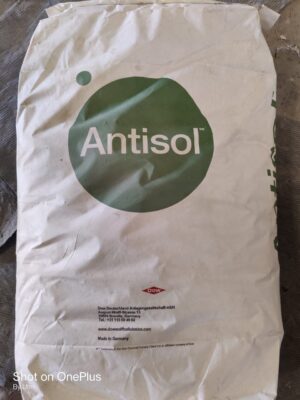
Antisol
- Original price was: ₦250,000.00.₦210,000.00Current price is: ₦210,000.00.
- Add to cart
Reviews
There are no reviews yet.