boric acid
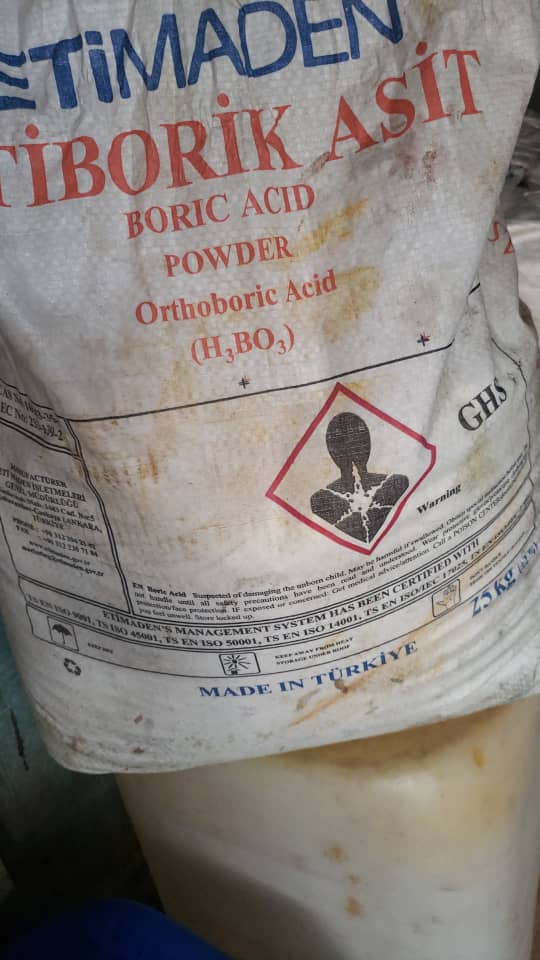
Boric acid — got it. That can mean a few very different things depending on what you’re looking for. Quick rundown first, then I’ll tailor it 👇
What it is:
A mild acid (H₃BO₃), white powder/crystals, used in chemistry, medicine, and household stuff.
Common uses:
🐜 Pest control: Ants, roaches (works slowly by disrupting their digestion)
🧪 Chemistry & labs: Buffer solutions, neutron absorption
👁️ Medical (limited): Antiseptic/antifungal (e.g., boric acid vaginal suppositories under medical guidance)
🧼 Household: Mold control, laundry deodorizing
🔥 Industrial: Glass, ceramics, fiberglass
Safety notes (important):
❌ Toxic if swallowed in significant amounts
❌ Not for open wounds or long-term unsupervised use
⚠️ Especially unsafe for children and pets if misused
₦70,000.00
Description
Boric acid — got it. That can mean a few very different things depending on what you’re looking for. Quick rundown first, then I’ll tailor it 👇
What it is:
A mild acid (H₃BO₃), white powder/crystals, used in chemistry, medicine, and household stuff.
Common uses:
🐜 Pest control: Ants, roaches (works slowly by disrupting their digestion)
🧪 Chemistry & labs: Buffer solutions, neutron absorption
👁️ Medical (limited): Antiseptic/antifungal (e.g., boric acid vaginal suppositories under medical guidance)
🧼 Household: Mold control, laundry deodorizing
🔥 Industrial: Glass, ceramics, fiberglass
Safety notes (important):
❌ Toxic if swallowed in significant amounts
❌ Not for open wounds or long-term unsupervised use
⚠️ Especially unsafe for children and pets if misused
Here are the legitimate medical uses of boric acid, with the important caveats spelled out clearly 👇
🩺 Medical Uses (Evidence-Based but Limited)
1. Vaginal antifungal (yeast infections)
Used mainly for recurrent or resistant yeast infections
Often effective when standard antifungals fail (e.g., non-albicans Candida)
Comes as pharmacy-prepared vaginal suppositories
⚠️ Only for vaginal use — never oral
🚫 Not recommended during pregnancy unless specifically directed by a clinician
👉 This is its most accepted modern medical use
2. Antiseptic / Antibacterial (historical & niche)
Mild antiseptic properties
Previously used for:
Minor skin infections
Eye irrigation (very dilute)
Largely replaced today by safer, more effective agents
3. Eye care (very limited)
Used in highly diluted, pharmaceutical-grade solutions
Acts as a buffer and mild antiseptic
⚠️ Not safe to DIY — improper concentration can damage the eye
4. Ear infections (rare, clinician-directed)
Occasionally used in compounded treatments for chronic otitis externa
Always under medical supervision
🚫 What It Is NOT Safe For
❌ Swallowing / oral ingestion
❌ Long-term or repeated unsupervised use
❌ Use on open wounds
❌ Use in infants or young children
⚠️ Key Safety Notes
Toxic if absorbed in large amounts
Can cause irritation or systemic toxicity if misused
“Natural” ≠ harmless
Reviews
There are no reviews yet.