

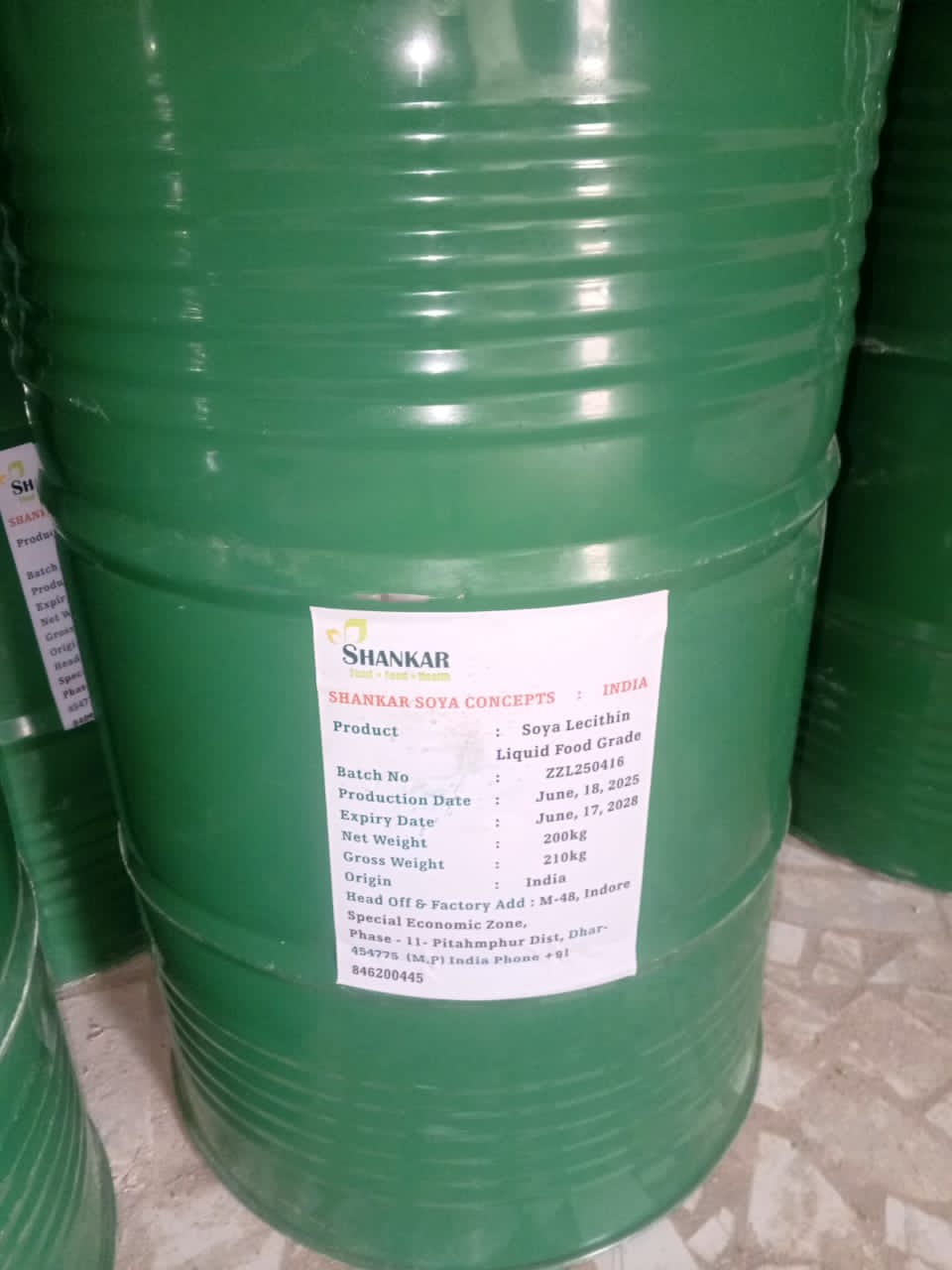
soya lecithine liquid
Soy lecithin (liquid form) is a natural emulsifier derived from soybeans. It’s commonly used in food, cosmetics, and supplements. Here’s a quick overview:
✅ What It Is
A mixture of phospholipids extracted from soybeans.
Naturally oily and viscous in liquid form.
Often used to blend ingredients that normally don’t mix (like oil and water).
✅ Common Uses
Food industry
Improves texture and shelf life
Used in chocolate, baked goods, margarine, dressings
Cosmetics & skincare
Acts as an emollient and stabilizer
Helps deliver active ingredients deeper into the skin
Supplements
Source of phosphatidylcholine for brain/liver support
✅ Benefits
Helps prevent ingredient separation
Adds smoothness and consistency
Can support brain and liver health when consumed as a supplement
❗Things to Note
Generally considered safe, even for most people with soy allergies (because it contains little to no soy protein), but sensitive individuals should check labels.
Available in liquid, granules, or powder—liquid is easiest to mix into oils.
₦720,000.00
Description
Soy lecithin (liquid form) is a natural emulsifier derived from soybeans. It’s commonly used in food, cosmetics, and supplements. Here’s a quick overview:
✅ What It Is
A mixture of phospholipids extracted from soybeans.
Naturally oily and viscous in liquid form.
Often used to blend ingredients that normally don’t mix (like oil and water).
✅ Common Uses
Food industry
Improves texture and shelf life
Used in chocolate, baked goods, margarine, dressings
Cosmetics & skincare
Acts as an emollient and stabilizer
Helps deliver active ingredients deeper into the skin
Supplements
Source of phosphatidylcholine for brain/liver support
✅ Benefits
Helps prevent ingredient separation
Adds smoothness and consistency
Can support brain and liver health when consumed as a supplement
❗Things to Note
Generally considered safe, even for most people with soy allergies (because it contains little to no soy protein), but sensitive individuals should check labels.
Available in liquid, granules, or powder—liquid is easiest to mix into oils.
⭐ 1. For Cooking & Baking
➤ As an emulsifier (mixing oil + water)
Use it when making:
Homemade chocolate
Nut butters
Salad dressings
Sauces
How much:
➡️ 0.3%–1% of the total recipe weight
(Example: For a 500 g recipe, use 1.5–5 g lecithin)
How to use:
Warm it slightly if it’s thick.
Mix into the fat/oil phase first.
Add the oil-lecithin mixture to your water phase and blend.
⭐ 2. For Homemade Chocolate
Helps reduce viscosity and makes chocolate smoother.
How much:
➡️ 0.3–0.5% by weight.
How to use:
Melt your cocoa butter and chocolate mass.
Stir in the liquid lecithin at the end of melting.
Mix well until fully blended.
⭐ 3. For Nut Butters (peanut, almond, etc.)
Prevents separation of oil and solids.
How much:
➡️ 0.5–1%
How to use:
Add lecithin to your oil or melted fat.
Blend into nut butter until smooth.
⭐ 4. For Bread & Baking Dough
Improves texture and shelf life.
How much:
➡️ 1 teaspoon per 3 cups (360 g) of flour
How to use:
Mix directly into the dough with the wet ingredients.
⭐ 5. For Cosmetic & Skincare Formulations
Acts as an emulsifier, stabilizer, and skin conditioner.
How much:
➡️ 0.5–5% depending on formula.
How to use:
Add lecithin to the oil phase of your lotion or cream.
Heat the oil phase to melt the lecithin (usually 60–70°C).
Blend with the water phase using a stick blender or homogenizer.
⭐ 6. For Drinks & Smoothies
Helps keep powders suspended and improve creaminess.
How much:
➡️ ½ teaspoon per 1 liter
Mix in and blend.
Tips for Using Liquid Soy Lecithin
It’s very thick—warming it makes it easier to measure.
Too much can make recipes gummy or sticky.
Start with small amounts and increase only if needed.

Reviews
There are no reviews yet.